
What is sexual harassment?

Physical contact: expression of closeness vs. sexual harassment
※ What’s the difference
- In order to differentiate between sexual harassment and expressions of closeness or affection, you should first consider how the other person feels about it.
- Sexual harassment is a sexual behavior conducted against another person’s will and is a violation of human rights that harms the other person’s sexual autonomy.
- According to Article 2 of the Act on the National Human Rights Commission of Korea, sexual harassment occurs when an employee or employer of a public organization[p1] uses his/her position or power at work, in employment, or other relevant relations in a way that makes another feel a sense of humiliation and/or revulsion, or purposefully compromises that person’s interests in retaliation for not responding to a sexual request.
- According to the University Regulations on the Prevention and Management of Sexual Violence and Sexual Harassment, sexual harassment is defined as conduct that causes a sense of humiliation and/or revulsion in another person, regardless of whether or not it legally constitutes a crime, and covers unsolicited verbal and physical sexual behaviors and requests that harm another person’s sexual autonomy.
※ Sexual harassment can be divided into physical, verbal, and visual types.- Sexual harassment is a sexual behavior conducted against another person’s will and is a violation of human rights that harms the other person’s sexual autonomy.
- According to Article 2 of the Act on the National Human Rights Commission of Korea, sexual harassment occurs when an employee or employer of a public organization[p1] uses his/her position or power at work, in employment, or other relevant relations in a way that makes another feel a sense of humiliation and/or revulsion, or purposefully compromises that person’s interests in retaliation for not responding to a sexual request.
- According to the University Regulations on the Prevention and Management of Sexual Violence and Sexual Harassment, sexual harassment is defined as conduct that causes a sense of humiliation and/or revulsion in another person, regardless of whether or not it legally constitutes a crime, and covers unsolicited verbal and physical sexual behaviors and requests that harm another person’s sexual autonomy.

- Touching part of another person’s body such as the breasts or buttocks
- Unsolicited physical contact such as kisses, cuddling, hugging from behind, etc.
- Forced massage or caressing
- Unsolicited physical contact such as kisses, cuddling, hugging from behind, etc.
- Forced massage or caressing
· Verbal harassment

- Discussing another’s physical and sexual appearance or purposefully spreading sexually-related information about the person
- Unsolicited sexual jokes
- Making unwanted, explicit or implicit sexual requests
- Unsolicited sexual phone calls
- Forcing another person to sit next to you and serve alcoholic drinks
- Unsolicited sexual jokes
- Making unwanted, explicit or implicit sexual requests
- Unsolicited sexual phone calls
- Forcing another person to sit next to you and serve alcoholic drinks
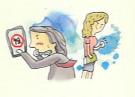
- Displaying or showing another person indecent pictures
- Sending indecent pictures to another person through the Internet or by facsimile
- Looking at another person in a sexually suggestive way
- Sending indecent pictures to another person through the Internet or by facsimile
- Looking at another person in a sexually suggestive way
- Asking another person to go out on a date with you in an insistent and/or repeated manner
- Stalking (unwanted or obsessive attention including following the victim in person and bothering him/her)
- Gender-discriminatory comments and/or conducts such as “How dare you as a woman… ”
- Stalking (unwanted or obsessive attention including following the victim in person and bothering him/her)
- Gender-discriminatory comments and/or conducts such as “How dare you as a woman… ”
Cases of sexual harassment on campus
· Between professors/school employees and students
- Unsolicited sexual behaviors directed at students
- Making sexual requests in return for higher grades, thesis approval or career-related advantages
- Giving disadvantages to students in retaliation for not accepting sexual requests
- Compromising a learning environment by engaging in unsolicited sexual conduct
· Between colleagues/peers- Making sexual requests in return for higher grades, thesis approval or career-related advantages
- Giving disadvantages to students in retaliation for not accepting sexual requests
- Compromising a learning environment by engaging in unsolicited sexual conduct
- Unsolicited sexual humor and/or conduct
- Dismissing the opinions of those of the opposite sex by making catcalls or gender-discriminatory remarks
· Between peers of the same sex- Dismissing the opinions of those of the opposite sex by making catcalls or gender-discriminatory remarks
- Sexual violence can occur between people of the same sex
- Sexual violence is in essence a matter of power relations and therefore not limited to people in different gender groups
- While sexual violence is traditionally defined based on the occurrence of vaginal intercourse or in a heterosexual relationship, recently same-sex relationships have been included
- Sexual violence should be defined based on the experience of the victim
- Sexual violence is in essence a matter of power relations and therefore not limited to people in different gender groups
- While sexual violence is traditionally defined based on the occurrence of vaginal intercourse or in a heterosexual relationship, recently same-sex relationships have been included
- Sexual violence should be defined based on the experience of the victim
☞ Perpetrating sexual violence with someone of the same sex does not necessarily mean that the offender is homosexual, since sexual violence is driven by a desire for power rather than a sexual impulse.

- Sex-related swear words, unwanted sexual remarks, virtual intercourse, or sexual requests through instant messaging (sexting), email, in a chat room, or on a bulletin board
- Sending gender-discriminatory and/or sexually harassing electronic messages or posting such messages on a bulletin board
- Sending gender-discriminatory and/or sexually harassing electronic messages or posting such messages on a bulletin board
- Placing a victim in danger in both the online and offline environments by revealing his/her personal information on the Internet through false postings such as “partner wanted”
· Stalking
- Unwanted intensive attention that may involve following the victim in person and psychological /physical harm
- Deliberately following the victim, lurking around the victim’s house or places that the victim frequents, and attempting contact with the victim
- Inflicting harm in any form to the victim’s possessions
- Deliberately following the victim, lurking around the victim’s house or places that the victim frequents, and attempting contact with the victim
- Inflicting harm in any form to the victim’s possessions

- Offering offensive material to the victim, leaving such material in a place where the victim frequents, or leaving such material in a situation where the victim will find it
- Monitoring the victim
Sexual Harassment Prevention Guide
Sexual Harassment Prevention Guide (Download)